You apply a moisturizer. Your skin feels comfortable for a moment. Then, within minutes or hours, the dryness returns.
This is one of the most common skincare frustrations, and it is often misunderstood.
The issue is not always the product. It is how skin actually behaves.
What “Dry Skin” Really Means
Dryness is not always about a lack of oil.
In many cases, it is about a lack of water in the outermost layer of the skin, the stratum corneum. This layer relies on a balance of water, lipids, and natural moisturizing factors to stay flexible and comfortable.
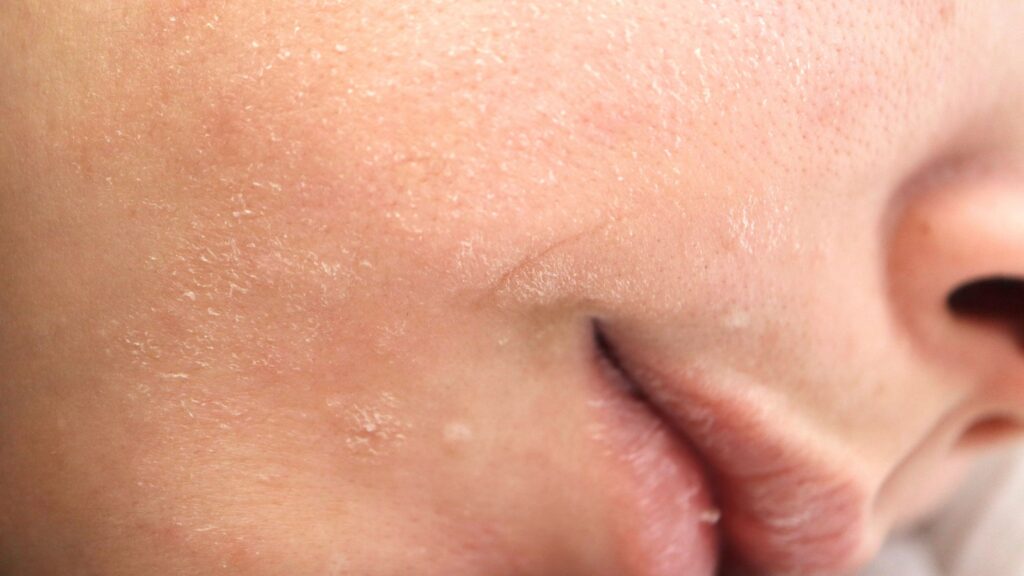
When that balance is disrupted, skin can feel tight, rough, or uncomfortable, even if you have applied a rich cream.
Why Moisturizers Don’t Always Solve the Problem
Most moisturizers are designed to do one or more of the following
Add oils or emollients to soften the skin
Reduce water loss with occlusive ingredients
Add humectants that attract water
But here is the key point
Adding oil does not automatically increase water content in the skin
If your skin is already low in water, a product that mainly contains oils may make it feel smoother, but not truly hydrated.
The Role of Water in Skin Comfort
Hydration is about water.
The stratum corneum needs water to maintain flexibility and a healthy structure. Without enough water, even well-formulated products can feel ineffective.
Humectants like glycerin help bind water within the skin. However, their effectiveness depends on the surrounding environment and the rest of the formula.
If there is not enough water available, or if it evaporates too quickly, the effect is temporary.
Transepidermal Water Loss and Why It Matters
Your skin is constantly losing water through a process called transepidermal water loss.
This is normal, but when the skin barrier is weakened, water escapes more rapidly.
This leads to a cycle
Water leaves the skin
The skin becomes less flexible
It feels dry and tight
You apply more product
The effect does not last
Without addressing water loss, moisturizing becomes a short-term fix.
Why Some Products Feel Hydrating but Don’t Last
A product can feel hydrating on application because of its texture or initial water content.
But lasting hydration depends on
How well the formula retains water
Whether it supports the skin barrier
The balance between humectants, emollients, and occlusives
If this balance is off, the skin may feel hydrated briefly, then return to dryness.
The Missing Link: Skin Barrier Function
The skin barrier plays a central role in how your skin feels.
When it is functioning well, it slows down water loss and helps maintain hydration levels.
When it is compromised, even good products struggle to deliver lasting results.
This is why some people feel like they need to reapply moisturizer constantly.
What Actually Helps
Improving how your skin feels is not about using heavier products.
It is about supporting how skin behaves
Use formulations that combine water-binding ingredients and barrier-supporting lipids
Apply products to slightly damp skin to increase water availability
Avoid over-cleansing, which can disrupt the barrier
Focus on consistency rather than constantly switching products
Conclusion
If your skin still feels dry after moisturizing, the issue is not necessarily the product you are using.
It is the interaction between water, the skin barrier, and how the formulation behaves on your skin.
Understanding this changes how you approach skincare.
And often, it is the difference between temporary comfort and real, lasting results.
About the author
The Skin Behavior Lab is a cosmetic science–focused platform dedicated to understanding how skin and ingredients actually behave. The content is based on formulation knowledge, ingredient analysis, and real skin behavior rather than trends or marketing claims.